Anyone who watches the news knows that Lebanon has been a hot bed for internal/external strife for quite some time. The country has not been able to establish itself due to infighting, interference from former imperial forces (France/Syria), and now being the center for foreign policy for influence in West vs Middle East. Signs of the civil war are fairly limited as there have been major restoration projects to clean it all up, but current events serve as a constant reminder for the fire burning under the ground. I had the opportunity to visit Lebanon and Syria after I finished my work in Holland (Sept/Oct 2008)
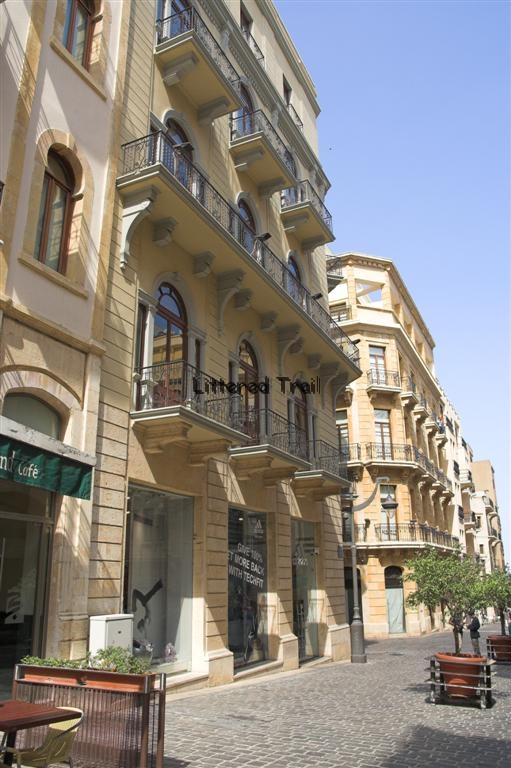 Beirut is a very robust, modern city. The old city is still very vibrant and attached, but there is a sense of renewal to regain the status of “Pairs of the Middle East”. As you can see on the left, there is a fair amount of French influence in the architecture. There is a great deal of energy and resources being spent to restore the beauty of the downtown area. Something unique about the USA/Canada when compared to the rest of the world is the type of building materials used. In the USA/Canada, most buildings/homes are built with steel and wood. The rest of the world uses mainly concrete and steel. The main problem is time; for larger structures, it takes a while to finish a building. On top of it, if a building takes extensive damage, repairs are very costly and time consuming, again due to the type of building materials used. To get an idea of how Beirut looked during the civil war, simply complete a search on Google for “Beirut civil war” and change the search to images.
Below are three images of the statue in Martyr’s Square, Beirut.
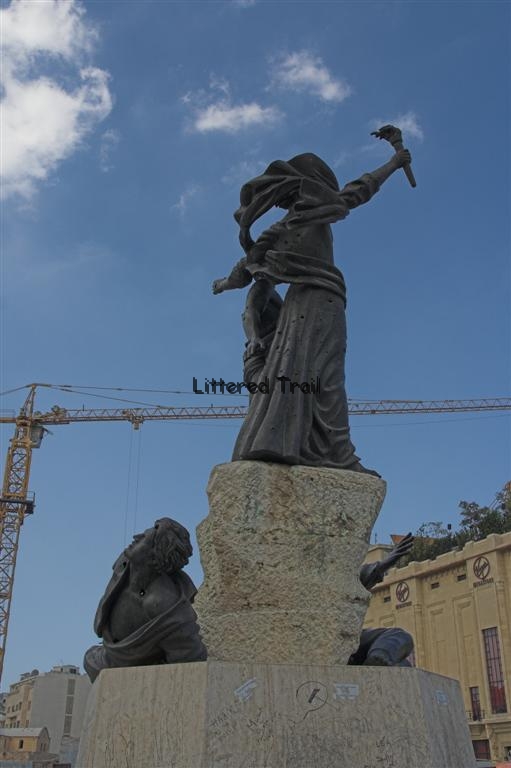
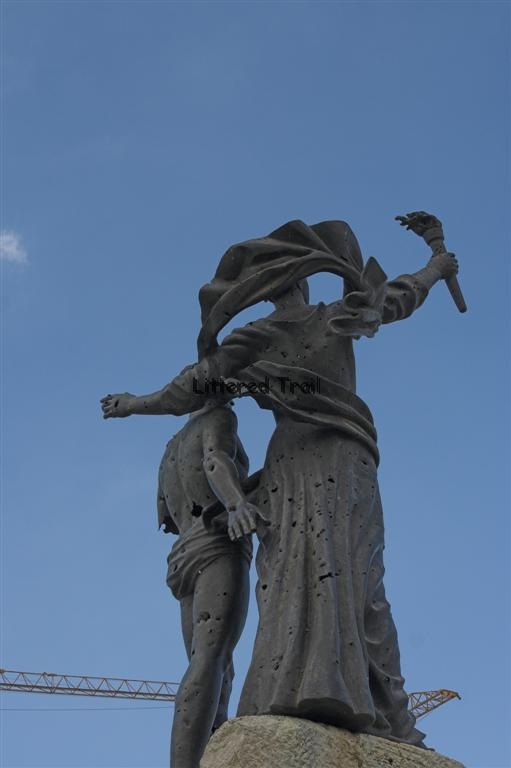
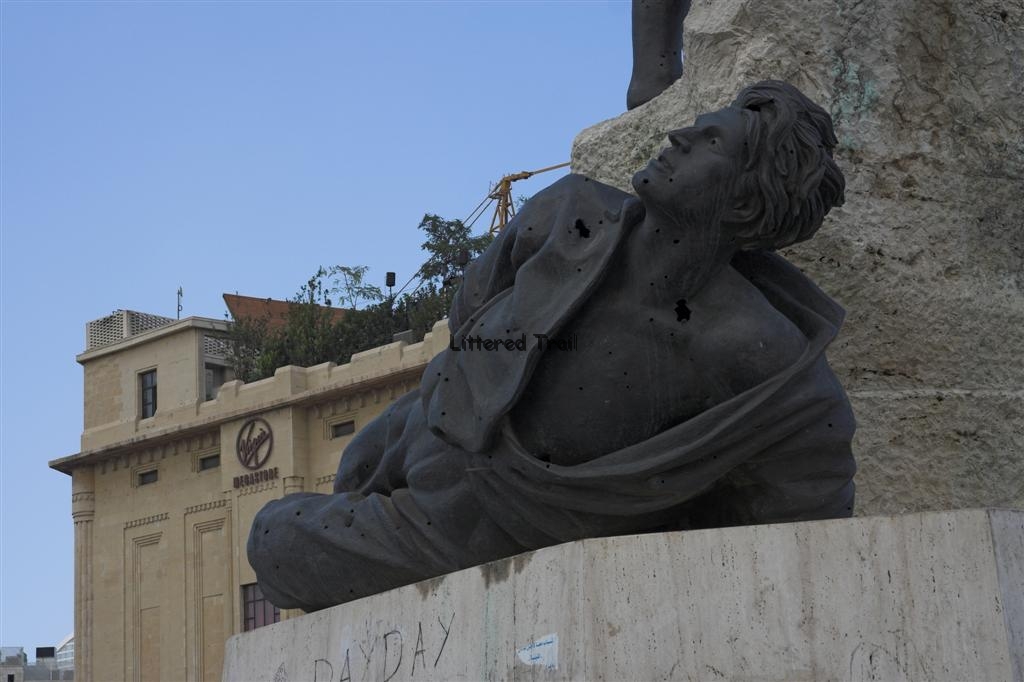
You can click on the thumbnails to see the full size images. In the full sized image, you can see the statues are riddled with bullet holes. Like most other civil wars, the Lebanese Civil war was rather vicious. In certain areas, people were shot while walking down the street. The tallest empty building in that area during the civil war was a hotel, which many people used to post in during the day. The crane in the picture is almost ironic, as it serves as a reminder of the on-going restoration and expansion of downtown Beirut.
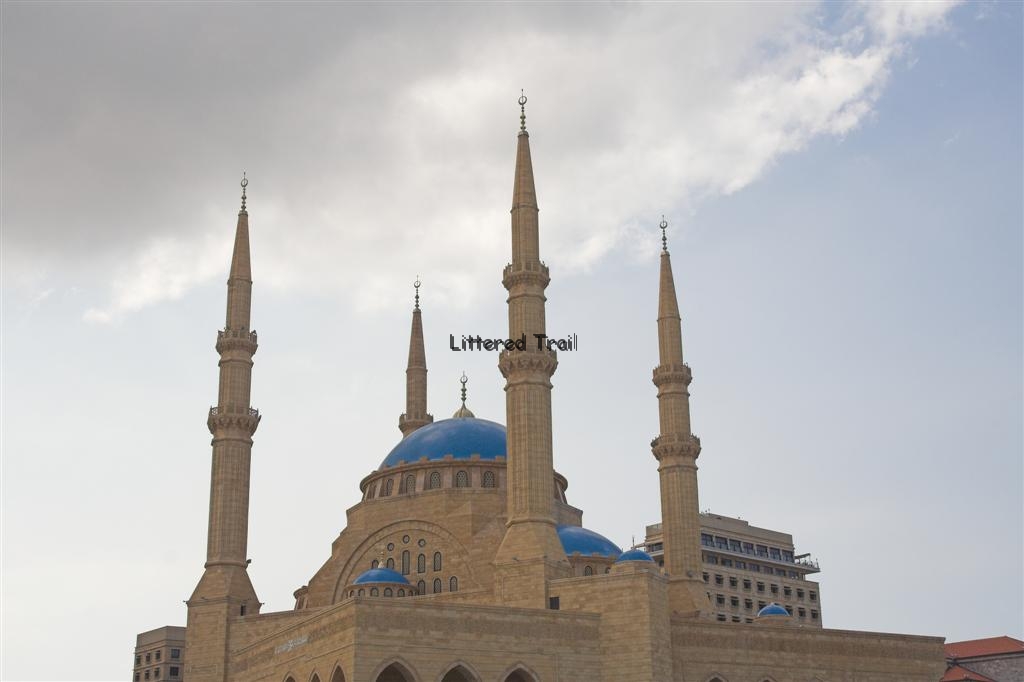 Turning around to face the other way, you see the El-Amin Mosque. It’s a little out of place given it’s size. The late Rafik Hariri, a former prime minister of Lebanon who was assassinated in 02, 2005, is buried next to the mosque. The mosque was under construction during my visit to Lebanon and I was unable to get any pictures of the inside. I overheard some mumbling by locals that this mosque was a claim of dominance by the Muslims in Lebanon due to it’s size. There were some apparent land allocation concessions for church expansion, but I never heard the details. I was able to visit the burial ground for Hariri, which is directly adjacent to the mosque.
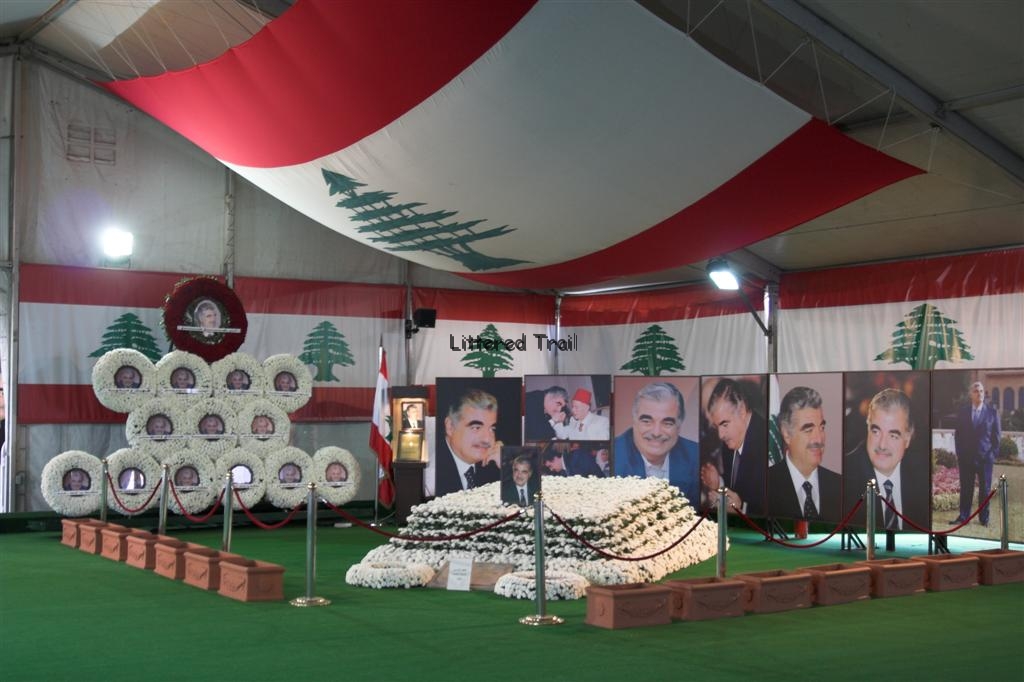 The buriel ground for Hariri is constantly dressed with flowers and decorated. The number of pictures surrounded by flowers on the left are each given by a family member (wife, kids, son/daughter in laws, etc.). The people who died with him are inside the structure more and to the right. They also are decorated with flowers, which are likely donated by the Hariri family as they look exactly the same.
Lebanon is a beautiful country that I hope to visit more often. It’s unfortunate such a wondrous landscape has been wrought with conflict during my life. Hopefully the future will be calm and prosperous.
- Noted hostel costs: $15-30
- Average meal (street or small shop): $2-7 per person
- Average meal (restaurant): $15-30 per person
- Average Taxi ride (inside city): 2000 Lebanese Liras per person ($1.66)
- Average bus fare: 1000 Lebanese Liras per person ($0.66)
Tags: Beirut, Lebanon, Middle East
Leave a Reply